- Swiss Islamic Finance
- Posts
- The Currency of Integrity

What the Prophet’s ﷺ Monetary Policy Teaches Us Today
In last week's newsletter, we explored how the Islamic economic model is neither a brutal form of capitalism nor a top-down version of socialism. It is a path of balance, built on justice, property rights, trade, and responsibility. But what about money itself?
Today, we turn our focus to a foundational question of Islamic finance:
What is sound money in Islam?
And what does our history teach us about the currencies of the future?
The Early Years: Gold, Silver… and Pragmatism
Contrary to the assumption that Islam invented its own monetary system from day one, the historical record tells us something more pragmatic, and more relevant for us today.
In the early years of Islam, the Prophet ﷺ and the Muslim community used the existing currencies of the time:
Byzantine (Roman) gold dinars
Sassanid (Persian) silver dirhams
There was no immediate attempt to “Islamize” money through force or revolution. Instead, there was an understanding: if a system of exchange works, you use it. If it’s unjust or flawed, you reform or replace it.
This continued until the later part of the Prophet's ﷺ life and especially after his passing, when the first Islamic coinage was minted under Umayyad Caliph ʿAbd al-Malik ibn Marwān, decades after the Hijrah.
The Muslims retained the gold and silver standard, but began issuing coins with Qur’anic inscriptions and Islamic designs, severing symbolic ties with Byzantium and Persia.
📚 Sources:
Ibn Kathir (al-Bidāyah wa al-Nihāyah)
"The Monetary System of the Islamic State" – Abul A’la Maududi
Cambridge University’s numismatic studies on Umayyad reforms
Someone just spent $236,000,000 on a painting. Here’s why it matters for your wallet.
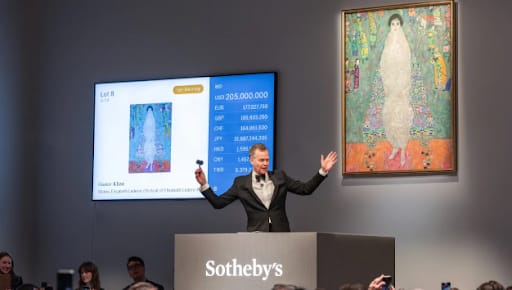
The WSJ just reported the highest price ever paid for modern art at auction.
While equities, gold, bitcoin hover near highs, the art market is showing signs of early recovery after one of the longest downturns since the 1990s.
Here’s where it gets interesting→
Each investing environment is unique, but after the dot com crash, contemporary and post-war art grew ~24% a year for a decade, and after 2008, it grew ~11% annually for 12 years.*
Overall, the segment has outpaced the S&P by 15 percent with near-zero correlation from 1995 to 2025.
Now, Masterworks lets you invest in shares of artworks featuring legends like Banksy, Basquiat, and Picasso. Since 2019, investors have deployed $1.25 billion across 500+ artworks.
Masterworks has sold 25 works with net annualized returns like 14.6%, 17.6%, and 17.8%.
Shares can sell quickly, but my subscribers skip the waitlist:
*Per Masterworks data. Investing involves risk. Past performance not indicative of future returns. Important Reg A disclosures: masterworks.com/cd
What This Teaches Us: Principles Over Symbols
This approach gives us a critical insight into the economic mindset of Islam:
Islam doesn't seek to break what works.
It seeks to purify, improve, and reform what doesn’t.
It’s not about ideological purity or revolutionary slogans. It’s about ethical functionality.
Just like the Prophet ﷺ built a mosque and a market, and just like he refused to artificially intervene in prices unless there was injustice. The Islamic approach to money is not about rigid dogma, but about honesty, stability, and social justice.
The Fiat Problem: When Money Loses Integrity
Fast forward to today.
Our currencies are no longer backed by gold or silver. Since the end of the gold standard in 1971, we’ve entered a phase of chronic currency debasement:
Central banks expand money supply by trillions
Your savings lose value silently through inflation
The poorest are punished, while assets inflate beyond reach
This is not a neutral system, it’s a system that silently redistributes wealth from savers to debtors, and from the periphery to the center of power.
As Muslims - individuals, families, and communities - we must recognize this erosion for what it is: a form of monetary injustice.
New Solutions Are Emerging
That’s why we must pay attention to what’s happening around us.
People like Satoshi Nakamoto didn’t invent money, they proposed an alternative. A system based on math, fixed issuance, and decentralized governance. Whether or not Bitcoin is the perfect solution is still debated, but the point is:
The conversation is open.
And as Muslims, we cannot afford to sit this one out.
We must study these systems. We must understand them. And ultimately, we must build our own contributions to the world of ethical, stable, and just finance.
At Swiss Islamic Finance, we’re actively developing solutions in this space, you'll hear more soon. But for now, here's where we invite you to start:
Useful Links & Inspiration
🟡 EverGive – Bitcoin for Charity
An amazing initiative using Bitcoin to make charitable giving sustainable, efficient, and transparent.
🔗 Visit EverGive →
🎧 Podcast: Iqbal Nasim with Muhammed Yesilhark
One of the most grounded conversations on Islamic wealth, purpose, and modern markets.
🔗 Listen here →
Your Next Move
Ask yourself:
How am I storing value today?
Is my savings strategy ethical, stable, and future-proof?
What role can I play in shaping a just financial future?
If you care about these questions, you’re in the right place.
We’re not just watching the future of finance
We’re building it. Join us and stay 3 steps ahead.
Whatever your needs may be, have a look at my linktree and book your free 1-on-1, or join our Skool Community

Stay strategic. Stay grounded. Stay halal.
—
Saâd
from Swiss Islamic Finance
Invite Your Friends
If you enjoyed this issue, forward it to someone who’s asking if “Bitcoin topped”, they’ll thank you later: